
Tomorrow evening, Morocco walks out in Boston against France for a place in the World Cup semi-final, the second tournament running that the Atlas Lions have reached this stage, a feat no African country has ever managed before. Nigeria will be watching from home too, like everyone else, except we won’t be watching a Nigerian team lose narrowly to a giant somewhere in the bracket. We won’t be watching at all.
The Super Eagles are not in the United States, Canada or Mexico this summer. They are not anywhere near a World Cup pitch, having lost a penalty shootout to DR Congo in Rabat last November, then spent months arguing about it at FIFA headquarters in Zurich instead of preparing for anything on a training ground.
Here is the part that should embarrass us more than it seems to: Nigeria has never had a talent problem. This is the country that gave the world Kanu, Okocha and Obafemi Martins, and now sends Victor Osimhen to fight for European Golden Boots every season. The Super Falcons, operating under the exact same federation as the men’s team, have won their tenth Women’s Africa Cup of Nations title, coming from two goals down against a Moroccan side playing in front of its own fans. Ten titles. No other women’s national team on earth, in any confederation, has ten. If raw ability were the metric that decided football success, Nigeria would be unbeatable. It clearly is not the metric.
What Nigeria has is a structural problem, and this World Cup has spent a month showing us, through our own neighbours, exactly what solving it looks like.
Start with Morocco. In 2007, King Mohammed VI, alarmed at how few proper academies existed in a country obsessed with the game, ordered one built from scratch outside Rabat. Nearly two decades and hundreds of millions of dirhams later, the Mohammed VI Football Academy scouts boys as young as six from every province, houses and schools them alongside their football, and has quietly grown into the spine of the national team. Ounahi, Aguerd and En-Nesyri all came through its gates before beating Canada and the Netherlands on the way to this quarter-final.
That did not happen by accident. A state decided, on paper, that talent identification could not be left to chance, and then funded that decision for twenty uninterrupted years regardless of who sat in government.
Senegal took a related route. Long before “diaspora scouting” became a buzzword, academies like Génération Foot and Diambars were already doing the unglamorous work of turning barefoot street footballers into professionals. Génération Foot’s twenty-three-year partnership with France’s FC Metz has quietly produced Sadio Mané, Ismaila Sarr and Pape Matar Sarr, among many others. Metz gets first refusal on the best graduates, Senegal gets a functioning pipeline it could never have financed alone. More than eight in every ten players in the current national squad now come through a structured academy.
Senegal has roughly 20 million people, a fraction of Nigeria’s population, yet it out-produces us at almost every youth level. Their World Cup ended in the round of 32 this time, an agonising extra-time defeat to Belgium, but simply being there, for a fourth tournament running, is the part that matters.
Then there is Ivory Coast, whose “golden generation”, the Touré brothers, Didier Zokora, Gervinho, Emmanuel Eboué, etc., were almost all products of one academy in Abidjan, the old ASEC Mimosas youth setup that a Frenchman named Jean-Marc Guillou reshaped in the 1990s. Guillou’s method was almost anti-modern: barefoot training, no goalkeepers in the earliest drills, an obsession with pure technique. He reminds me of the Irish Reverend Father who coached the football team of St. Patricks College, Calabar, in the 1990s.
It worked so completely that two-thirds of Ivory Coast’s 2006 World Cup squad had passed through that single gate. The Elephants fell in the round of 32 this time, to Norway, but they were back at a World Cup for the first time since 2014, proof that one well-run academy from three decades ago is still paying interest today.
And then, Cape Verde, the story that should sting Nigerians most, because it removes every excuse we usually reach for. Cape Verde has a population of roughly 525,000, smaller than several single Local Government Areas in Lagos or Kano. It is a nation with no oil wealth, no domestic league to speak of, and, until last October, no World Cup qualification in its history.
Coach Pedro “Bubista” Brito built his squad by scouting the Cape Verdean diaspora scattered across Portugal and the Netherlands and weaving them in with home-grown talent around a 40-year-old goalkeeper, Vozinha, who has since become a folk hero. The Blue Sharks arrived in North America as complete outsiders, held reigning European champions Spain scoreless in their opening match, fought Uruguay to a draw, then held their nerve against Saudi Arabia to become the smallest nation, by population, ever to reach a men’s World Cup knockout round.
They eventually fell to holders Argentina in extra time in Miami, 3-2, in a game already being called one of the tournament’s finest. A country of half a million people out-organised, out-fought and very nearly outplayed the world champions. Nigeria has 242 million people and could not get past a play-off against a country, DR Congo, that had not been to a World Cup since it was still called Zaire.
This is where the excuses run out. The usual defence of Nigerian football is that we are too big, too poor and too politically complicated to organise properly, as though smallness were the secret to Cape Verde’s discipline and size were a legitimate excuse for our chaos. The real difference is not size. It is the Nigeria Football Federation itself. It is controlled by thirty-seven state association chairmen, the same faces recycling through “failed” administrations election after election, because the real prize was never the trophy. It was guaranteed access to FIFA and CAF grant money.
This is Nigerian football’s oldest proverb come alive: monkey dey work, baboon dey chop. The players sweat, the fans hope, and somebody else eats. The House of Representatives is currently supposed to be investigating over $25 million in such grants received between 2015 and 2025, including a $1.2 million stadium in Birnin Kebbi that inspectors found substandard on arrival. As of this writing, that probe has produced no report. Nobody has been summoned. Nobody has answered for the money.
The neglect runs deeper than boardrooms and grant queries. Nigeria’s football-mad culture was once its greatest asset, where talented children found their way to a pitch; sandals for goalposts and all. My experiences in Lagos Island’s Campos Square were a microcosm of this reality. The football wizardry on display was compelling; the best players I have ever seen weren’t on television, but on the “monkey-post” on roads and alleys, and ragged field matches. Sadly, none of them ever made it to the big leagues.
But that informal system was never a substitute for organised grassroots structure, and Nigeria has let both wither at once. Physical education largely exists on paper in Nigerian public schools, starved of pitches, equipment and trained instructors, so the mass, early-identification net that Morocco and Senegal now run through their academies simply has no equivalent here.
Even where raw talent survives the neglect, the coaching that meets it is decades behind. Nigerian youth teams still routinely operate without video or performance analysts, the basic tools that let Morocco’s academy graduates walk into a World Cup dressing room already fluent in the modern tactical game. A country can survive one of these gaps. Nigeria is trying to survive all of them at once, leaning on willpower and street talent to compensate for a pipeline very few have bothered to build, and not at the needed scale for measurable impact.
The domestic league tells a version of the same story. More than eighty percent of NPFL clubs remain owned by state governments, which means salaries and survival depend on the mood of politicians rather than on gate receipts or sponsorship. There are, to be fair, small signs of movement. The league recently announced it would roughly quintuple its championship prize money, from ₦200 million to a promised ₦1 billion, alongside a proper minimum wage for players.
Nigerian football has heard grand promises before, though. The Super Falcons, ten-time African champions, have spent years staging protests over unpaid allowances and training in hand-me-down jerseys while the federation insists the men’s team simply attracts more sponsorship, even as the women outperform them on every measure that matters. A number on paper means very little in a system with a long habit of not keeping its word.
None of this requires Nigeria to invent anything new. Morocco, Senegal and Ivory Coast have already written the manual: ring-fence development money so it cannot quietly disappear, build two or three real academies, and defend their funding for twenty years regardless of who is in power. It does not need to start with a grand five-year plan either, it can start with something as basic as auditing where the last $25 million actually went, and refusing to let the same thirty-seven chairmen keep re-electing each other into a job whose only real qualification is access to the till.
Cape Verde has written a shorter and harder lesson; that organisation and belief can outperform population and money, but only if somebody is actually in charge of the organising. Nigeria is not short of Osimhens. It is short of a federation willing to build the kind of house that lets talent like his stay home long enough to grow before it has to leave. Until that changes, we will keep producing the players and watching, from the outside, as smaller, less-resourced, better-organised countries take them to tournaments Nigeria should be hosting on its own terms.
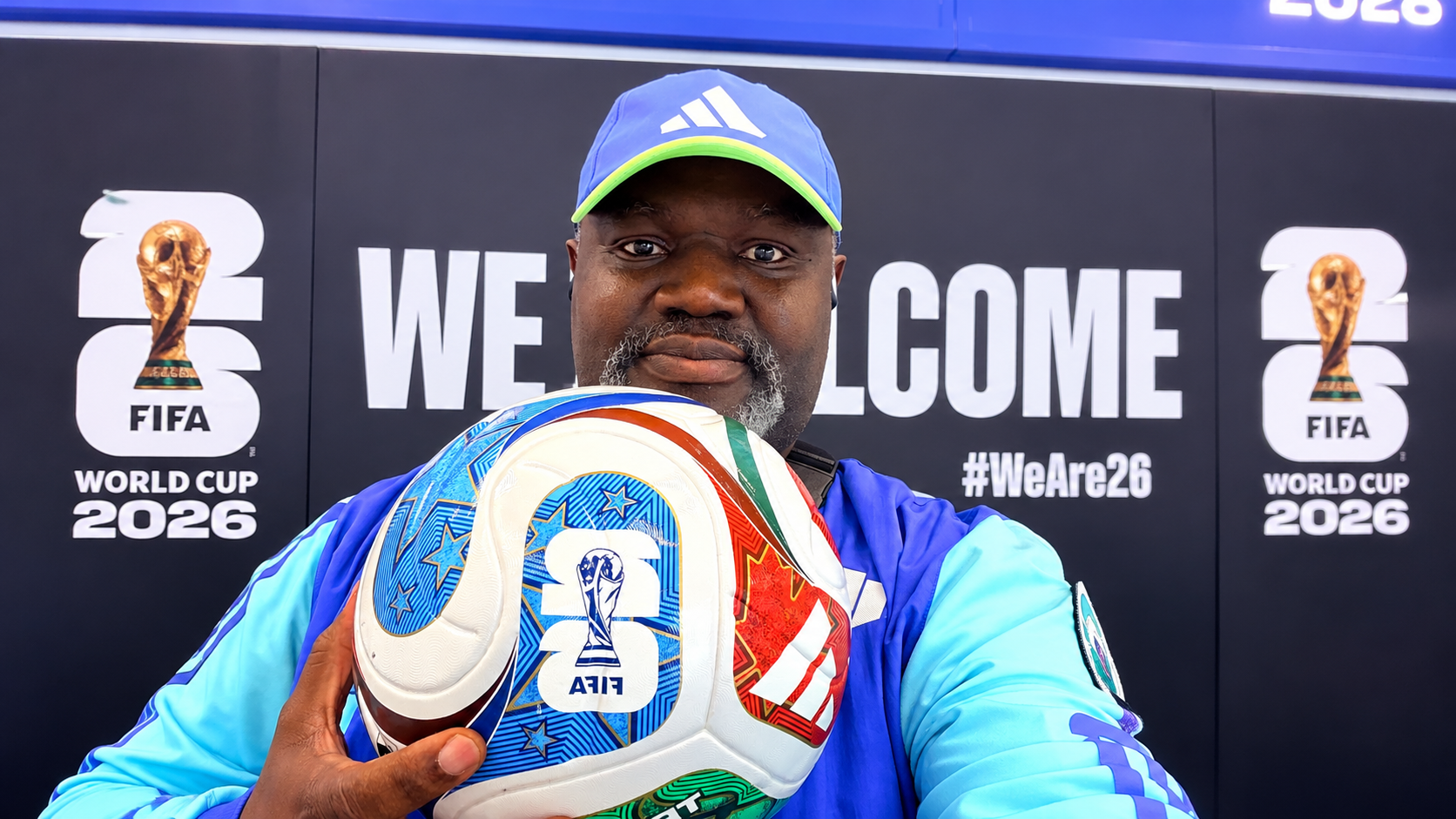
Like we say in Nigeria, “it is well.” As I watched this year’s tournament from the sidelines as a volunteer, I couldn’t help but see not just the games, but the clear, achievable blueprint for what Nigeria could be. It is a stinging reminder that our absence from the world stage isn’t a lack of magic, but a refusal to build the house that contains it. I hope one day soon, we stop settling for watching and start building again.

