
I came across a post on X recently that sent me back to the troubled history of Nigeria’s privatization programme.
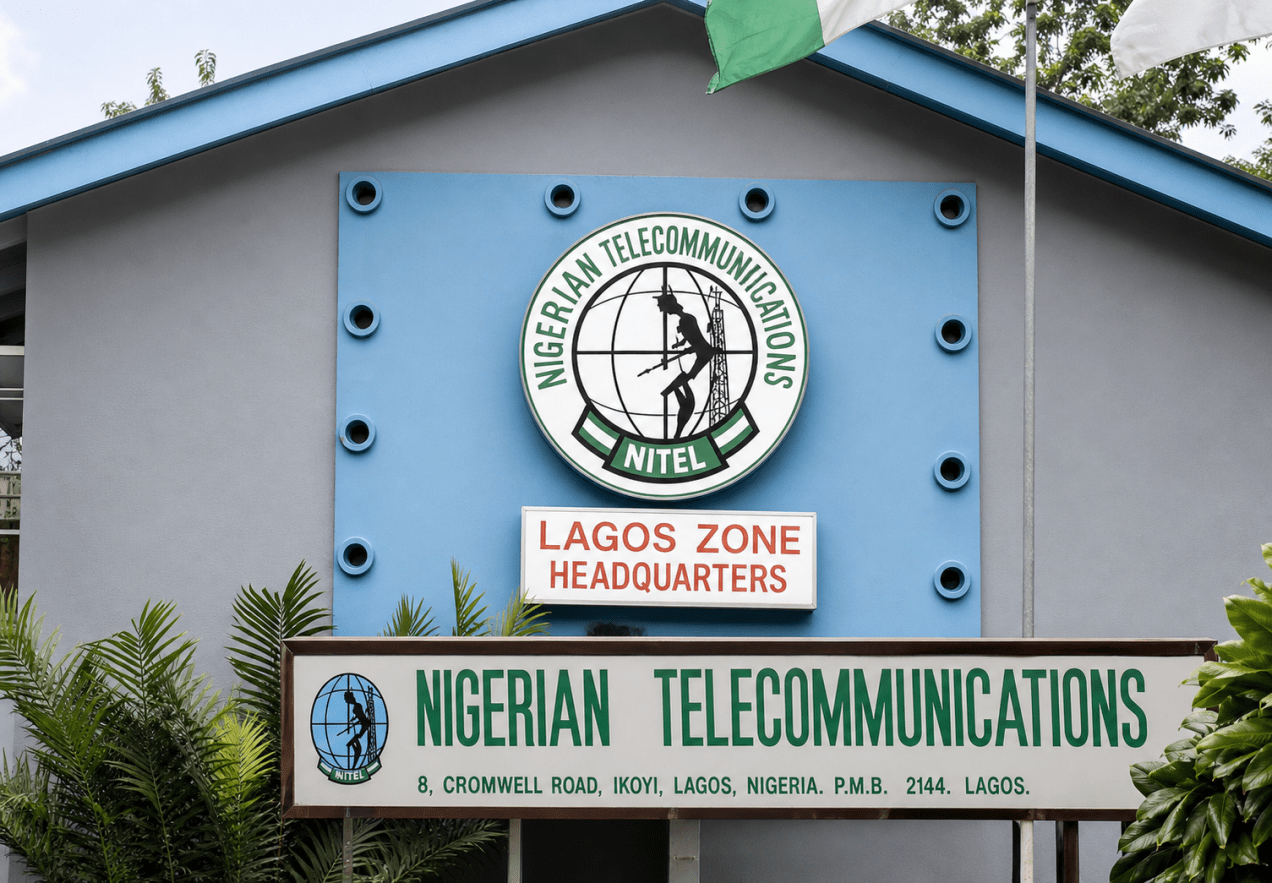
It reminded me of the 2003 NITEL-Pentascope scandal. NITEL, Nigeria’s state-owned telecommunications company, was not just another public enterprise. It was responsible for critical national infrastructure, including Nigeria’s access to the SAT-3 undersea cable, a major artery for international connectivity.
Yet NITEL was handed over to Pentascope, a Dutch firm that was barely a year old, reportedly had only eight employees, including the janitor, and had no serious experience managing a major telecommunications company.
Within a year, NITEL moved from a ₦15 billion profit to a ₦19 billion loss. More than 250,000 homes reportedly lost their phone lines. It was not a complex failure. It was a failure hiding in plain sight.
For me, Pentascope is not just a bad chapter in our telecoms history. It is the perfect lens through which to examine many of Nigeria’s privatization heartbreaks: ALSCON, Ajaokuta, Delta Steel, and the 2013 power sector unbundling.
In that same X thread, someone argued that Nigerians should simply “move on” from these failures. It reads like an innocuous statement from a frustrated citizen, but never a good idea. Moving on without understanding what went wrong is not closure. It is willfully inflicted amnesia, acting mature. Nations that forget their policy failures do not heal from them. They repeat them, and usually at a higher cost.
And this matters now because the next privatization cycle is already being designed.
We are looking at Port Harcourt and Warri refinery rehabilitation packages, NNPC Limited’s downstream divestments, Federal real estate assets, State-level electricity distribution assets, and more. If we do not understand what broke between 2001 and 2013, we will pay the same tuition twice. The first receipt was already too expensive. The receipts, by the way, do not come from activists or professional critics. They come from the Bureau of Public Enterprises itself.
In February 2025, BPE Director-General Mr Ayodeji Gbeleyi told Nigeria’s House of Representatives that Delta Steel, a $700 million asset, was sold to Global Infrastructure Nigeria Limited for $30 million in 2005, even though BUA International had submitted a higher $31 million bid. The buyer later pledged the plant as bank collateral, defaulted, and the Asset Management Corporation of Nigeria eventually re-acquired the debt at ₦22 billion before the plant was resold for ₦32 billion.
Simply put, the Nigerian taxpayer paid for that one asset three times.
Then there is ALSCON, the $3.2 billion aluminium smelter in Akwa Ibom State. It went to UC Rusal for $205 million after BFI Group’s higher $410 million bid was disqualified over a payment-timing technicality. The Supreme Court of Nigeria ruled in 2012, and again in January 2024, that the disqualification was unlawful. Yet the plant has remained substantially idle for over a decade.
What about the 2013 power sector privatization?
At $2.2 billion, it was the largest privatization exercise in Nigeria’s history. It was sold to Nigerians as the beginning of the end of our electricity crisis. Twelve years later, grid collapses are routine, tariffs have multiplied, and the Federal Government is relying on the Siemens Presidential Power Initiative, a German-backed partnership, to do what private operators were supposed to help deliver.
Someone may object and say the telecoms sector worked. That argument confuses two different things.
What worked in telecoms was liberalization, not the privatization of NITEL. The Nigerian Communications Commission’s auction of GSM licences in 2001 opened the market to new operators such as MTN, Econet, and later Globacom. That was a greenfield market opening. It allowed competition to emerge where none had existed.
That is very different from selling a State-owned incumbent inside a captured procurement environment. NITEL, the actual privatization case, failed repeatedly. The lesson is clear. Nigeria has done better when it opened sectors to competitive entry. It has done far worse when it sold strategic State assets to poorly vetted buyers under weak contract enforcement.
Looking back, I see three structural patterns across these failures.
First, pre-qualification was often theatre.
In ALSCON, Delta Steel, the Electricity Distribution Companies, and NITEL itself, stronger technical or financial bidders were disqualified, ignored, or overtaken by politically favoured acquirers. When bidder substitutions become routine, it is usually a sign that the real decision rule is not the one published in the bid documents.
Second, performance covenants were not enforceable.
Buyers promised capital injection, technical partners, operational improvements, and service-quality benchmarks. But when they failed to deliver, the state either waited years to reverse the sale or did nothing meaningful. Delta Steel’s buyer pledged the plant to a bank within months. Several power sector buyers loaded their balance sheets with debt while service delivery remained weak.
Either the contracts left the door open, or the regulators chose not to close it. Whichever it was, the result was the same. A covenant that cannot be enforced is not a covenant at all; it is an ornament on a failed transaction.
Third, the “investor who did not pay” became a recurring character in the drama.
ILL-NITEL, New Generation-NITEL, Omen-NITEL, and several power sector transactions followed a familiar pattern of large promises, weak payment discipline, returned bid bonds, and transactions quietly allowed to die. A privatization programme that cannot enforce its own bid security is operating on an honour system. And in these cases, honour was not exactly overflowing.
Like almost every other thing in Nigeria, none of this happened in a vacuum.
The same elite networks that benefited from these transactions are still in the room when the next cycle is designed. That is the reality of political economy. Good policy design does not pretend that these incentives do not exist. It builds guardrails strong enough to survive them.
There are better models.
Rwanda offers one useful comparator. Through the Rwanda Development Board, strategic privatizations were often structured less as pure cash sales and more as anchor-investor concessions tied to clear development milestones. The goal was not merely to dispose of State assets. It was to attract operators with the capacity and obligation to invest, improve service, and meet measurable targets.
That distinction matters.
It is reportedly the kind of model Bayo Ojulari, the NNPC Group Managing Director, is considering for Nigeria’s struggling refineries. If so, the shift is conceptually important. It recognises that the objective is not just fiscal disposal. It is industrial revival and capacity restoration. Those two goals require different policy instruments. Selling an asset is not the same as rebuilding an industry.
So, before Nigeria moves another major Federal asset, one thing should be non-negotiable: an independent, published post-transaction audit of every major privatization since 2001.
This should not be a witch hunt. It should be a balance-sheet exercise. The audit should answer three questions.
- What was the fair value of each asset compared with the sale price?
- Which contractual obligations did buyers breach?
- What is the current condition of the asset today?
Those findings should then become the basis for two urgent reforms.
First, Nigeria needs codified pre-qualification thresholds, so technically or financially superior bidders cannot be unlawfully pushed aside through political discretion or procedural “gamesmanship” (or lend me a better word).
Second, future share-sale agreements must include self-executing performance covenants. If a buyer fails to inject capital, meet service benchmarks, or maintain the asset, consequences should follow automatically. Not after ten years of litigation. Not after a House committee hearing.
The audit will establish the facts, and the reforms will fix the pattern. Everything else is downstream of these.
And by the way, investigative committees, like the 2025 House of Representatives panel on Delta Steel, usually arrive after the asset is already gone. These hearings almost always feel like a ruse to show legislative activity without the bite of proper oversight. They must start asking the hard questions before any deal is signed.
Anything less, and someone will be writing this same article in 2036.

