
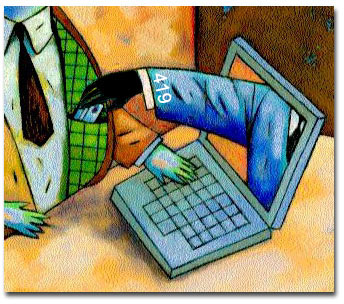
September 2008, I was sitting in class when I had to introduce myself to a number of colleagues who were taking the same course. When I mentioned that I was African, they pressed further to enquire where I was from Africa. I mentioned that I was from Nigeria, and one of the Black American who sat by me asked how I coped with the stereotype of ‘Internet Fraudsterdom’ that has being appended generally on Nigerians here in the US. I feigned ignorance just to give the impression that there were still people who still could not relate to the phenomenon. The next question was on how long I had lived in Nigeria, and when I replied “all my life”, I was bombarded with a series of inquiries that sounded like “so how many people do internet fraud back in Nigeria?” “It’s not written on anyone’s face and besides as a computer programmer myself I had to enlighten them that most of the software used to generate credit card numbers by the Nigerians are Russian creations. So there is international cooperation when it comes to this act of cyber larceny. However, I could not shove off the disgust that welled up within me. This is what we have done to ourselves and it is fair game when Nigeria is singled out as a country that harbours such people.
What is not acceptable however is when people use the term “Nigerians” to associate with Internet scams. Of recent we have been subjected to humiliating depictions on movies and commercials to the point that it’s getting very touchy. While District 9 increased the intensity of the slap, the recent PS3 advert was just off point completely. Of what use was the line in the script? They could have accomplished their goal without imputing that scathing line. I didn’t see the advert until my South American friend pointed it out to me on Facebook. So it seems now what we are getting most popular for is scams, militancy, religious conflicts, and noisemaking.
Continue reading
 It is amazing how this global economic recession has become a propagator of tales; tales ranging from misfortunes, financial wreckages, broken hearts, soberness, and more frequently an increased art of prudence. Everywhere you turn you hear stories of how people have been battered and tattered by the melt down around the world. You read new blogs, which the writers were forced to start since they lost their job, chronicling their lives with no pay and how they are attempting to make the best of it. Others share logs of woes that have befallen them, while seeking advice from a host of readers from the corners of the earth. Lives have been touched by the economic travails and many seem beyond redemption. But the stories that amaze me most are how much of a lie many people had been living when the system seemed to have been working fine. As much as the capitalist driven world laid its foundations on mere paper and had a sudden collapse at a little shove from a sector of one country, many people have had their illusionary cloaks stripped from them. Now nakedly they stare at an unforgiving world and wonder what happened.
 We see that after the much drama that took place in Egypt, Pharaoh eventually released the Israelites to begin their uncertain journey, which even Moses did not know the route. He kept on telling Pharaoh that God wanted His children to go and sacrifice to Him in the wilderness, a case that the Bible didn’t mention in Moses’ several conversations with God. Moses got a release order with a cloud of uncertainty as to the real direction he was to lead the multitude through. However, he didn’t have much to worry about, as the one who had performed extreme signs was capable of leading them out and taking them into their promised land. I can imagine the air of discomfort that hovered over Moses every time he went to his kinsmen and boasted that there is a promised land which was their final destination. Did someone ever ask him for a map of the route they were going to take? Did people ever wonder where he appeared from forty years after he disappeared from Egypt with no clues to his whereabouts? Let’s face it! It surely was not that easy for Moses to wake up and stand before this people who have known no other place than Egypt for over 400 hundred years. To convince them that they will have to leave their present zone, no matter how uncomfortable it was, to move to a location he called the Promised Land was a tough task. Moses Himself had never been to the place, neither anyone he was leading. So he not only had to lead the people, he had to lead himself.
 Thoughts of a Calabarboy.