issues

Reclaiming Journalism: Elevating Policy Over Political Drama

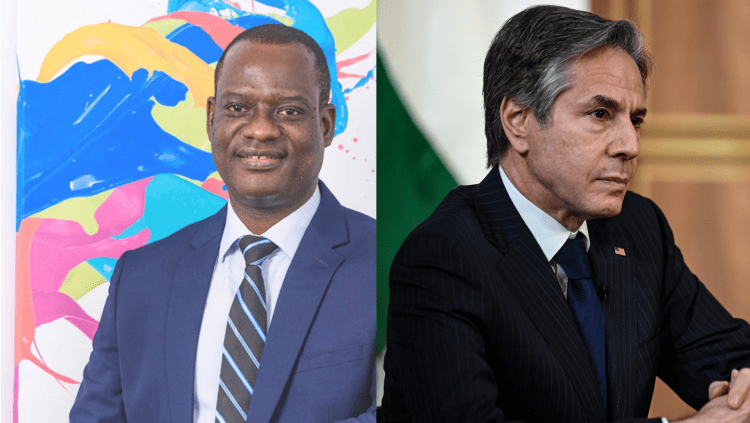
Taiwo Oyedele & Anthony Blinken. Images from AB Magazine and The New York Times

One of the greatest needs of human society today is to resist the temptation of letting politics overshadow the narratives of development. Unfortunately, this has become increasingly common, leading to the erosion of qualitative conversations about substantive issues. Add to this the high-speed consumption of information and the democratized media space, and we find ourselves caught in a spiral of ugly dialectics, yielding little more than sensationalized reportage with no progressive value.

More troubling, however, is how journalists, who are meant to shape public discourse by asking intelligent questions of those in power, often veer into the realms of mischief. They court political jesters who “must politic” instead of engaging meaningfully with policy experts. Even when they sit down with individuals who staff the critical nerves of public policy, their focus tends to remain firmly on politics, leaving policy discussions as an afterthought.

Continue reading
Standard
issues

Public Policy and the Critical Factors of Time, Skills, Resources, and People (2)

Skills – The Engine of Policy Execution

Skills are the lifeblood of effective policy implementation. Public policy is about ideas translated into action, and the competence of the individuals and institutions involved determines whether those ideas thrive or flounder. While the vision of a policy may be grand, without the right skills to design, execute, and adapt it, even the best-intentioned efforts will fall flat. Conversely, skilled policymakers bring so much wisdom into how governments deliver on their mandate and promises.

In public policy, skills operate on multiple levels. Policymakers require analytical skills to craft sound policies, negotiation skills to build consensus, and foresight to anticipate challenges. On the other hand, the bureaucrats and technocrats who implement these policies need the technical know-how to translate concepts into actionable programs. Then there are the citizens, whose awareness and participatory skills can significantly influence a policy’s reception and success.

Continue reading
Standard
issues

Public Policy and the critical factors of time, skills, resources, and people

Recently, I have been meditating on the general concepts of Time, Skills, Resources, and People and how they interplay to produce desired outcomes. Initially, these thoughts were rooted in private considerations—how best to manipulate these factors for beneficial results. But, as is often the case, my reflections wandered to a familiar domain: public policy.

Having invested the last 15 years of my life working in, studying, learning within, and partnering in the area of government affairs and public policy, I can’t help but view concepts through this lens. It’s second nature for me to contextualize almost anything within the framework of public policy, whether or not they are explicitly connected. Interestingly, these four factors—Time, Skills, Resources, and People—are implied in almost every aspect of policy, yet they are rarely purposefully factored in during the pursuit of policy goals.

At a fundamental level, I believe exploring these four factors individually and applying them to public policy will be incredibly useful for anyone in this field—whether you work directly in public policy, study it academically, or intersect with it in a cross-functional capacity.

Also, since recent research suggests that the adult attention span now averages 8.25 seconds, I’ll present this exploration as a four-part series. My hope is that this structure will not only respect your time but also encourage deeper thought and engagement with each concept.

Continue reading
Standard