issues

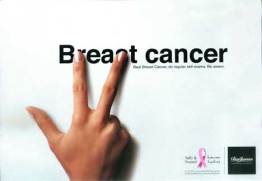
…KEY TO BEATING BREAST CANCER…

By Prof. Jane Plant, PhD, CBE

“Why I believe that giving up milk is the key to beating breast cancer”

Extracted from Your Life in Your Hands, by Professor Jane Plant.

I had no alternative but to die or to try to find a cure for myself. I am a scientist – surely there was a rational explanation for this cruel illness that affects one in 12 women in the UK? I had suffered the loss of one breast, and undergone radiotherapy. I was now receiving painful chemotherapy, and had been seen by some of the country’s most eminent specialists. But, deep down, I felt certain I was facing death. I had a loving husband, a beautiful home and two young children to care for. I desperately wanted to live. Fortunately, this desire drove me to unearth the facts, some of which were known only to a handful of scientists at the time.

Anyone who has come into contact with breast cancer will know that certain risk factors such as increasing age, early onset of womanhood, late onset of menopause and a family history of breast cancer are completely out of our control. But there are many risk factors, which we can control easily. These “controllable” risk factors readily translate into simple changes that we can all make in our day-to-day lives to help prevent or treat breast cancer. My message is that even advanced breast cancer can be overcome because I have done it.

The first clue to understanding what was promoting my breast cancer came when my husband Peter, who was also a scientist, arrived back from working in China while I was being plugged in for a chemotherapy session. He had brought with him cards and letters, as well as some amazing herbal suppositories, sent by my friends and science colleagues in China. The suppositories were sent to me as a cure for breast cancer. Despite the awfulness of the situation, we both had a good belly laugh, and I remember saying that this was the treatment for breast cancer in China, then it was little wonder that Chinese women avoided getting the disease. Those words echoed in my mind. Why didn’t Chinese women in China get breast cancer? I had collaborated once with Chinese colleagues on a study of links between soil chemistry and disease, and I remembered some of the statistics. The disease was virtually non-existent throughout the whole country. Only one in 10,000 women in China will die from it, compared to that terrible figure of one in 12 in Britain and the even grimmer average of one in 10 across most western countries. It is not just a matter of China being a more rural country, with less urban pollution. In highly urbanized Hong Kong, the rate rises to 34 women in every 10,000 but still puts the West to shame.
Continue reading

Standard
issues

BUILDING ON THE STRENGTH OF THE TIME

If you look or listen around, you will feel a sudden surge in the concerns we all have for our country. Most important is that young Nigerians all over are really building interest in the Nigerian project and there seems to be an increasing passion on experiencing due changes in all facet of the nation’s existence.  Every time you raise national issues in a discussion, everyone has a comment to make, and interestingly, such commentaries are loaded with intelligent submissions.

Not too long ago I was talking with a few young Nigerians who have barely lived in the country. As usual the subject of Nigeria came up, especially as we have been recently characterized as a rudderless ship floating nowhere. I was astonished at the extent to which these young ones have grown more competent in understanding the complexities of the society and having their minds congealed with high opinions on what’s going on and how this can be corrected. I find this to be fascinating because only a few years ago, young people were barely interested with what was going on in the country, especially with folks living without the country.

Today, everything that speaks Nigeria is basically an attempt at recreating an image for the country. From our entertainers, educators, researchers, scientists, and even social commentators, there is a word about Nigeria on everyone’s lip. On the lighter side (or maybe more serious than I think), we have suddenly become so internationally popular for differing reasons. From spinning adverts to freaky movies and to even underwear knockouts on a fateful Christmas day, Nigeria has had more than the usual dose of notoriety, which has evoked a plethora of commentaries, even from those who aforetime least mattered in the domain of public discourse.  Everyone is throwing something into this seething pot and hoping that we will eat the produce thereof and be glad.

Continue reading

Standard
issues

NIGERIA: A TERRORIST NATION?

I have personally been challenged by the question of Nigeria’s terrorist status over the last few weeks flowing from the unfortunate event of a misguided youth trying out his hands with under-pant pyrotechnics. But beyond the feverishness of the moment is the seeming pull factor which this circumstance has evinced. We have somehow been pulled to look closely in the direction of the antecedents of Nigeria and make a fair assessment if or not we deserve such appendage from the United States. While the patriotic me screams “HELL NO WE AREN’T”, and I feel like joining every Facebook group that stands against the listing of Nigeria on the terror watch list, I still find myself asking the seeming innocuous question: “Is Nigeria a terrorist country?”

I arrived safely at the JFK airport in New York, after the much hassle in Lagos and Istanbul only to be subjected to a 30 minutes thorough search, just when I thought I had escaped the adversities of the time. As I stood there subjected to such humiliation including almost having my laptop decoupled because of some three missing screws behind, issues raced to and fro my mind on the series of unfortunate events that has so beset Nigeria towards the close of 2009. A sick and wanted President, a fickle-minded government lacking the boldness to act in the face of national dishonor, broken promises, religious crises, and the likes, I felt as though being a Nigerian was increasingly being a risk.
Continue reading

Standard