
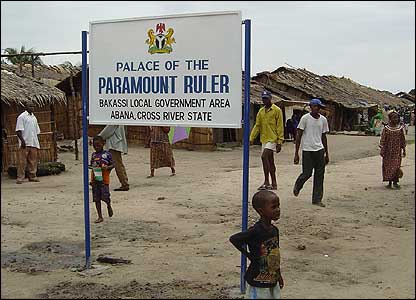
Some straight talk here. If I were from Bakassi, I would probably be organising my fellow young men, not to take up arms, but to ensure our voices were heard. In moments when survival is threatened and ancestral lands are transferred by people who do not know our history, frustration can boil over into militancy. When people behave irrationally, it is often because their very existence has been encroached upon, and they see no other path to defend their heritage.
I understand why some of my brothers might want to abandon their fishing nets and boats to protect their history and future. People will naturally fight for their common good when government fails to defend their existence. The history of the Bakassi people dates back to the 15th century when Efik settlers expanded into the peninsula as a fishing settlement . The Efik and Efut of Bakassi are the same people who live in Akpabuyo, Ikang and Calabar, a coastal people tied to the sea and its resources.
My concern is not merely that Nigeria deferred to the 2002 judgment of the International Court of Justice (ICJ), but that our leaders showed little understanding of the peninsula’s history. When I say that you cannot legislate a people’s history, I mean that law must be accompanied by politics and empathy. The 1913 Anglo‑German Agreements cited by the ICJ as delimiting the boundary from pillar 64 to the Bakassi peninsula were agreements between colonial powers; the Kings and Chiefs of Old Calabar had earlier concluded a treaty of protection with Great Britain in 1884, which gave Britain a stewardship role rather than ownership. Britain therefore had limited authority to cede Bakassi to another colonial power. Yet London has largely stayed silent on this historical anomaly.
The ICJ’s judgment is binding because Nigeria agreed to accept its jurisdiction. It affirmed that sovereignty over the Bakassi Peninsula lay with Cameroon and directed Nigeria to withdraw its administration and security forces . However, every country’s actions must be anchored in its national interest. The Bakassi peninsula is reputed to contain significant oil and gas deposits for which some estimates suggest as much as ten percent of global reserves, and its waters are a vital fishing ground. By uncritically accepting the Green Tree Agreement of June 2006, Nigeria relinquished not just territory but economic lifelines for our people.
The Green Tree Agreement promised to protect Nigerian nationals residing on the peninsula. It requires Cameroon to respect their culture, language and beliefs, to refrain from forcing Nigerians to leave, and to respect their right to continue fishing and farming . Yet the reality is that most inhabitants oppose the transfer. Many have been pressured to relocate to an inland “New Bakassi” that lacks the fishing grounds their livelihoods depend on. This is why I say that we have failed woefully to preserve the lives and comfort of our people.
The colonial origins of this dispute are often forgotten. The boundary instruments invoked by the ICJ include the 1929–30 Thomson‑Marchand Declaration, the British Order in Council of 2 August 1946, and finally the Anglo‑German Agreements of 11 March and 12 April 1913 . These were negotiated thousands of miles away with little regard for indigenous communities. Nigeria’s federal government should have mounted a political campaign to renegotiate aspects of the judgment rather than simply hand over the land.
Britain, whose colonial agreements underpin the ICJ ruling, has not made any practical effort to rectify the injustices of those treaties. If we argue against the Anglo‑German Treaty of 1913, we must remember that you cannot transfer ownership of what you did not originally own. The British were protectors, not owners, of Old Calabar. They had no moral right to gift the peninsula to Germany in 1913, yet that treaty became the linchpin of Cameroon’s claim .
As for Gen. Gowon’s negotiations in the early 1970s, they were conducted by a military government that lacked constitutional legitimacy. Agreements reached under his regime should have been reviewed by a civilian National Assembly to determine whether they served Nigeria’s national interest and respected the rights of affected citizens.
In the end, this episode reveals that we have little regard for the people we call Nigerians. We dispossessed them of their heritage and handed it to others who have no historical attachment to the area. I speak not from abstract theory but from personal experience. I have set foot on Bakassi, interacted with its people, bought their crayfish, ridden in their speed boats. They want the world to ask them where they wish to belong and to respect their choice.
Let us pray that Bakassi does not descend into the type of militancy seen in the Niger‑Delta. Where there is life, there is hope; and a new beginning can lead to new successes. But hope must be nurtured by leadership that understands history, values its citizens and knows that law without justice breeds resentment.
 Thoughts of a Calabarboy.
i AM INCLUDING THIS WONDERFUL PIECE IN A NEW ARTICLE COMING ONLINE TODAY. I HOPE YOU AND YOURS ARE WELL AND THAT YOU WILL COME OVER, TAKE A LOOK SEE AND SHARE YOUR THOUGHTS AS YOUR OPINION IS ALWAYS APPRECIATED AND SOUGHT AT NIGERIANCURIOSITY.COM.
OH, and, sorry for the caps. lol! I wasn’t ‘screaming’ at you, just neglected to turn that function of.
take care!
HCFeiD comment5 ,
After reading the article, I had some regrets; why didn’t the Nigeria populace both local and abroad protest heavenly during the court case before and after the treaty was passed. I am now not in regret any more. I am convinced now that there is hope. You cannot extinct history and people. Let all Nigeria young and small be educated on this and let the struggle for the survival of this region be protest across the border of the world.
You have spoken well. The joy and happiness of future generations has been mortgaged by the stupid self-gratifying desires of today’s leaders. What our history is so far, as a nation, is so appalling it brings tears to my eyes everytime I think about it. We have what it takes to be kings on this earth yet our leaders have chosen to make us slaves. Simply put, our leaders have failed us. I will like to say something: you corrupt leaders won’t live forever. One day, good will overcome evil because evil cannot thrive in the land forever.
You have also spoken well! Evil is exhaustive…
Cool
This is quite insightful and I like your logic. I believe something is inherently wrong with our culture and the way we reason. These politicians are our fathers, uncles etc.