issues

BAKASSI REVISITED

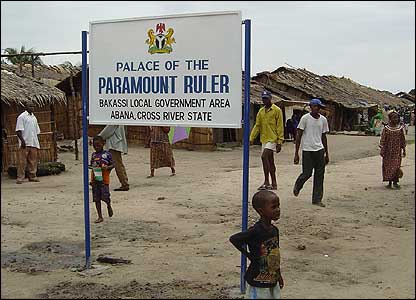
Some straight talk here. If I were from Bakassi, I would probably be organising my fellow young men, not to take up arms, but to ensure our voices were heard. In moments when survival is threatened and ancestral lands are transferred by people who do not know our history, frustration can boil over into militancy. When people behave irrationally, it is often because their very existence has been encroached upon, and they see no other path to defend their heritage.

I understand why some of my brothers might want to abandon their fishing nets and boats to protect their history and future. People will naturally fight for their common good when government fails to defend their existence. The history of the Bakassi people dates back to the 15th century when Efik settlers expanded into the peninsula as a fishing settlement . The Efik and Efut of Bakassi are the same people who live in Akpabuyo, Ikang and Calabar, a coastal people tied to the sea and its resources.

My concern is not merely that Nigeria deferred to the 2002 judgment of the International Court of Justice (ICJ), but that our leaders showed little understanding of the peninsula’s history. When I say that you cannot legislate a people’s history, I mean that law must be accompanied by politics and empathy. The 1913 Anglo‑German Agreements cited by the ICJ as delimiting the boundary from pillar 64 to the Bakassi peninsula were agreements between colonial powers; the Kings and Chiefs of Old Calabar had earlier concluded a treaty of protection with Great Britain in 1884, which gave Britain a stewardship role rather than ownership. Britain therefore had limited authority to cede Bakassi to another colonial power. Yet London has largely stayed silent on this historical anomaly.

The ICJ’s judgment is binding because Nigeria agreed to accept its jurisdiction. It affirmed that sovereignty over the Bakassi Peninsula lay with Cameroon and directed Nigeria to withdraw its administration and security forces . However, every country’s actions must be anchored in its national interest. The Bakassi peninsula is reputed to contain significant oil and gas deposits for which some estimates suggest as much as ten percent of global reserves, and its waters are a vital fishing ground. By uncritically accepting the Green Tree Agreement of June 2006, Nigeria relinquished not just territory but economic lifelines for our people.

The Green Tree Agreement promised to protect Nigerian nationals residing on the peninsula. It requires Cameroon to respect their culture, language and beliefs, to refrain from forcing Nigerians to leave, and to respect their right to continue fishing and farming . Yet the reality is that most inhabitants oppose the transfer. Many have been pressured to relocate to an inland “New Bakassi” that lacks the fishing grounds their livelihoods depend on. This is why I say that we have failed woefully to preserve the lives and comfort of our people.

The colonial origins of this dispute are often forgotten. The boundary instruments invoked by the ICJ include the 1929–30 Thomson‑Marchand Declaration, the British Order in Council of 2 August 1946, and finally the Anglo‑German Agreements of 11 March and 12 April 1913 . These were negotiated thousands of miles away with little regard for indigenous communities. Nigeria’s federal government should have mounted a political campaign to renegotiate aspects of the judgment rather than simply hand over the land.

Britain, whose colonial agreements underpin the ICJ ruling, has not made any practical effort to rectify the injustices of those treaties. If we argue against the Anglo‑German Treaty of 1913, we must remember that you cannot transfer ownership of what you did not originally own. The British were protectors, not owners, of Old Calabar. They had no moral right to gift the peninsula to Germany in 1913, yet that treaty became the linchpin of Cameroon’s claim .

As for Gen. Gowon’s negotiations in the early 1970s, they were conducted by a military government that lacked constitutional legitimacy. Agreements reached under his regime should have been reviewed by a civilian National Assembly to determine whether they served Nigeria’s national interest and respected the rights of affected citizens.

In the end, this episode reveals that we have little regard for the people we call Nigerians. We dispossessed them of their heritage and handed it to others who have no historical attachment to the area. I speak not from abstract theory but from personal experience. I have set foot on Bakassi, interacted with its people, bought their crayfish, ridden in their speed boats. They want the world to ask them where they wish to belong and to respect their choice.

Let us pray that Bakassi does not descend into the type of militancy seen in the Niger‑Delta. Where there is life, there is hope; and a new beginning can lead to new successes. But hope must be nurtured by leadership that understands history, values its citizens and knows that law without justice breeds resentment.

Standard
Naija

NIGER-DELTA: A CIVIL WAR IN THE MAKING?

I won’t make this long because I want to hit the nail on the head and get this heat off my head.

My mentor once illustrated this: “If you buy a brand new car, with all its sophistications and simply refuse to drive it, instead park it in the garage and adore it every morning. One year later try driving the car and see if it will respond.” The moral here is that nothing left to inaction retains its value. Rather, it degenerates in quality and ability to give satisfaction.

This is even readily applicable to our lives as people. Try sitting down and sleeping for one year, doing nothing but nothing, and see after the 52 weeks you would be better or worse. Of course you know the answer and I need not overbear the issue. Whatever is left to inaction gets worse. This is my fear for the Niger Delta crisis.

What we see today is the evidence of a long standing acrimony which has been gradually swelling from the inside and now is at the stage of implosion. After implosion comes explosion (at least to satisfy the beauty of literary usage), and we are sitting here watching the threat of another regional conflict arise. Africa has already suffered the severe consequences of regional conflicts that have sprung into national conflicts, with cross border implications.

We remember clearly how the war in Liberia started from a little corner of the country, before becoming a nationwide battle. Subsequently, it spill over into Sierra Leone and today we have witnessed one of the most brutal form of civil wars the world has ever known.  Have we also forgotten the Congo War, or the Ivorian one? The men who excite the emotions of these wars suffer no loss, but the innocent people seeking for bread and water to sustain their already impoverished lives bear the grunt of such conflicts.

Ethnic conflicts usually start when perception of oppression one side grows, and usually incited by the ideologies of one man or a group of men. The Niger-Delta is not exclusive to these trends with the area already wallowing in the pond of perceived discrimination, oppression, exploitation, degradation, and underdevelopment. Surely also many have risen up to fuel the fire of the misgivings already existing in the people of the area. Yet our leadership is lumbering like a drunken man from the beer chamber on the issue of resolving the conflict quickly.

We know the demands of these young and restless men and we cannot deny the fact that their grudges are justified. This is not a time to discuss whether they are adopting the right approach or not, for a hungry man cannot be counseled on dignity. We should not forget that the lives of people will waste if this issue is not grabbed b y the horns.

Nigeria should not assume we are absolutely impervious to civil wars, for they are usually subtle in their origins; hence leadership adopts a passive watch. But with the series of provoking comments the rebel leaders of the region have been making of late, and the slimy approach of the oil companies to deal with the issue, we may be heading down the ugly road of rare-return.

Now oil companies and rich politicians are probably going to patronize the Nigerian Package, which are amoured vehicles made for the conflict region by Texas Armoring Corporation. So it seems to me that there are still many trying to work their way around the situation rather than dealing with.

I am not a prophet of doom, but a voice of voice of one calling in the wilderness. Nigeria must be extremely careful in handling the situation in the Delta. As the cautionary statement on some packaging goes, this issue should read:
WARNING!!!! NIGER-DELTA INSIDE: HANDLE WITH CARE (FRAGILE)!!!!

Standard
issues

THE POWER OF AFRICAN PROVERBS

I have sat through merciless lectures on philosophies, concepts, paradigms and have tried to unravel the zeitgeist of European or Western minds, all to still be wanting in the basic understanding of my own people and their customs. The ideas we spend time studying back in school and even today, subtly, in the books we read, are all like one taking a medication to treat another man’s headache. Whereas we have our own medication in the ideologies of our traditional proverbs, we have abandoned them and now look like orphans in global circles. So we have set off to scavenge on foreign convictions to treat our local predicament. If my friends can not do the eating to assuage my own hunger, because only me can feel the grumblings of my stomach, how then do we assume that we can build our houses on other people’s foundations?

The internal configurations of any given society is determined by its history, culture, and geography. Thus to understand such people, you must necessarily look through these stated factors. So also is the process of identifying what raw materials must be employed in building the foundations for a sound society devoid of contradictions that clog the wheels of progress. Of course one should be wary of the quality of materials used in constructing a lasting national identity, because foundations matter, and this is what I believe we must have a rethink on the way we have built our so far.

There is nothing wrong with looking outside to understand inside, but there is no truth higher than the fact that powdering your face does not stop bad breath. Some issues that belie personal worth are self discovered and self propagated. Thus, in articulating a system that works for our people and ensuring that we engineer a proper mechanism for assimilating genuine values in our present and coming generations, we must be bold to collate and document the wise sayings of our people. We must build the conceptual framework of progress in every facet of our community: governance, relationships, education, family, etc. on these invaluable philosophies which have been captured by the sages in our history. I am of the opinion that the minutiae of our value system should be founded upon laid these laid down conceptions like the Indians, Chinese, Greeks, and Arabians have all done.

In not belabouring the matter, but leaving it to the simple judgements of the reader, I will henceforth in subsequent notes simply try to highlight some of the very sound and cross cutting African proverbs that I have come across in recent times. I have meditated on a bunch of them and found lots of truth therein. So I share one here that is of Zulu origin:

‘IN COPYING EVERYONE ELSE ALL THE TIME, THE MONKEY ONE DAY CUT HIS THROAT’

This proverb may evoke jocular responses and discussions, but there is no overstating the fundamentals of this statement. I actually saw a young man who was so enamoured by the life of a renowned expert to the point that he followed closely on the habits of the man. Unknowingly to him, his capacity to manage such high level scheduling was limited and he only realized, after experiencing a breakdown, that he ought to have first dealt with the details of hard work before launching into the dangerous waters of an active work life. This, as evident on this individual platform, is very obvious at the State level. Nations have sought to implement the successful ideologies of other nations to their own detriment. Those nations, like the Monkey forgot that others had a throat of steel which could not be cut or broken, thus committing suicide by attempting to ape others.

I give a classic example in many African nations of the sweet but noxious waters of Capitalism. While Adam Smith’s idea has arguably created a good life for many Western nations, the rush to adopt this system in many African countries has created the extremities of wealth and poverty. While capitalism itself is not an evil harbinger, those courting its provisions must be sure that internally, such structures that ensure its success are well entrenched. This Zulu proverb therefore guides our thinking in knowing the frequency of adapting foreign ideas to our local needs.

As I am writing this note, I am sitting here in conference room four in the UN building at New York and listening to representatives of countries adopt a common policy on the prevention, combat, and eradication of illicit trade in Small Arms and Light Weapons. Iran is proving a tough negotiator by delaying the consensus and this is evoking responses of rationality from some States for Iran to see reason. Suddenly my boss, representing the Nigeria and the Africa group takes the floor and suavely declares to all: “My people say that goat meat is sweet but takes long to roast. So while we are roasting it, what will the children eat?” In a powerful swing of events, that statement swayed the entirety of the delegates to sing in one voice against Iran. After the meeting so many throng his seat to express the love for his wise sayings, and frantically adjusting his ‘parachute’ (babariga), he struggles to shake all the hands being stretched towards him, while keeping a line of African delegates waiting to discuss further.

Please don’t tell me African proverbs are obsolete or shallow, for with it I am carving a path to a fresh understanding of the world around me, and I am so determined to inspire those around me to “look to the rock from whence we were hewn.” In the words of a Ghanaian proverb: “se wo were firi na wo san kofa a yenchi”, which literally means “it is not taboo to go back and fetch what you forgot”, I am going back to my roots to seek the basket of wisdom God has so heavily endowed us with. For so my uniqueness and true contribution to a new and meaningful living will begin.

Standard