
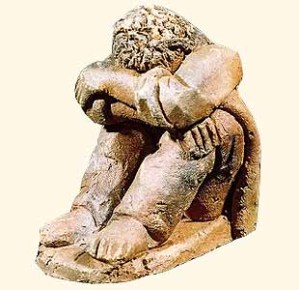
 You may wonder who the rest of us are and who in particular I am referring to. Well, I am one of those who stubbornly refuse to append derogatory terms such as Third World, Underdeveloped Countries, Developing Countries, or Poor Nations, on those countries that do not fall into the exclusive club of ‘Big Boy’ nations. The rest of us are a collection of those who are wondering what to do to escape the crippling implications of a global financial game gone sour. As it was in the beginning, when we rarely had a voice in deciding how global business was done, so it is now that we seem not to have a voice in how we can protect ourselves from the current meltdown in the system.
A few weeks ago, the world gathered at Davos World Economic Forum to discuss and determine the shaping of a post crisis world. I previewed some of the events and was particularly drawn to the comments of the British Prime Minister, Gordon Brown who observed that the crisis is going to hit the Third World countries real hard. Of course in the light of the current global situation, all other discussions bordering around developments in our part of the world was flickering in the background, as more pressing concerns about financial cooperation between big nations were dominant. However, his statement was one that shuddered me a bit to the realization that we stand again on the threshold of history to strongly negotiate benefits for our common destinies or trade it away for continued beggarly policies.
Clearly, no one seems to be telling us in plain terms, what this worldwide clutter spells for us. We have been a people termed as the periphery, in other words, those who sit at the sidelines or watch global events from the stands and have no meaningful inputs, while the center determines the rules and allocation of profits to everyone. But in the words of Chinua Achebe, all we see today is “Things fall apart and the center cannot hold”, therefore creating much despair regarding the future of the economies of developing nations. Some ask the question what the heck is our business with the American financial collapse? We are not in America and our money is not controlled by them so what concerns us? Really! What concerns the edge of the water with where the stone is cast? It is called ripples. That is what the edge of the water feels as a result of where the stone is cast. The point is this water has been troubled, and we will of necessity feel the ripples in our part of the world.
A major consequence for us is that being primarily an exporter of raw materials, we are hard hit by the fact there is a growing less demand for our produce. China that emerged as an economic savior of late is presently crawling with a clog to their manufacturing wheels due to fewer demands for their goods from the West. China has had to call of the execution of some projects in different locations in Africa and all such countries looking up to such benefits will have to rethink how to survive the downturn of events. Also the prices of these exports have also dropped as a consequence of falling demand, meaning less and less profit for countries dependent of such export for income. Who knows, we may soon return to the age of protectionism as even the advocates for this who are usually protesting at Davos, where somehow nowhere to be found. Probably because every country was going to act as their advocates
Secondly, I am wondering how much aid money will be drafted to help out with our development process. Many of our leaders are used to going cap-in-hand seeking for support to deal with their local problems. While I do not question the effectiveness of aid money when used properly, It is however reliant on the goodwill of the provider and of course the capacity of the giver for continued giving. I don’t have to explain much as now “charity begins at home” has become a watchword for developed nations who are struggling to meet the need of their internal needs. The US at the moment is looking at over a trillion dollar deficit, and their national debt is screaming in the ten trillion dollar range. Do we expect that it will still be gracious in committing its scarce resource to help developing countries? That may amount to political suicide for any administration. Even Non-Profit organizations like the Clinton Foundation are already trying to cut back on their activities due to shortfalls in their budgets. Similarly, the United Nations and its subsidiaries, which carry out most of their activities in Third World countries, depend on dues from these large economies and of course there will be cut backs in such functions.
We are still at the early stages of the effects of this crunch on developing nations. Maybe this is why our leaders seem not to be progressive and proactive in extracting oil from these hard rocks of time. I am yet to hear of continent wide efforts at dealing with the implications of the crisis on Africans. What is African Development bank, African Union, ECOWAS, SADC, NEPAD, e.t.c doing? African leaders were not even present at the Davos forum except for a few African Development Bank officials and South African representatives. I wonder what in the world we hope to benefit by staying back and watching things spiral out of control without an attempt to seek out solutions for our local economies from such gatherings. In fact, our Mayors, Businessmen, Financial officials and even the Central Bank Governors should have been present to gather technical information to map out indigenous solutions to protect their people from the dire consequences of a collapsing system. We have been at the receiving end of the present system. If we are not careful, we will fall behind again if new systems birth or evolve from the present one. We must be actively engaged in any negotiation for a global financial mechanism to ensure that we our interests are considered and provided for. So I ask this question: Is there hope for the rest of us?


 Thoughts of a Calabarboy.